Home » 150 years of history
150 years of history
1876
The origin
In 1876 John Bet started his own business in blade machining, establishing a tradition founded on precision and technical expertise. Not a symbolic gesture, but a professional choice: to work steel as a functional tool, intended for daily and specialized use. This is where Bet Cutlery was born: from a concrete vision of cutting, understood as craft, responsibility and control of the material.
1900
Knowledge that travels
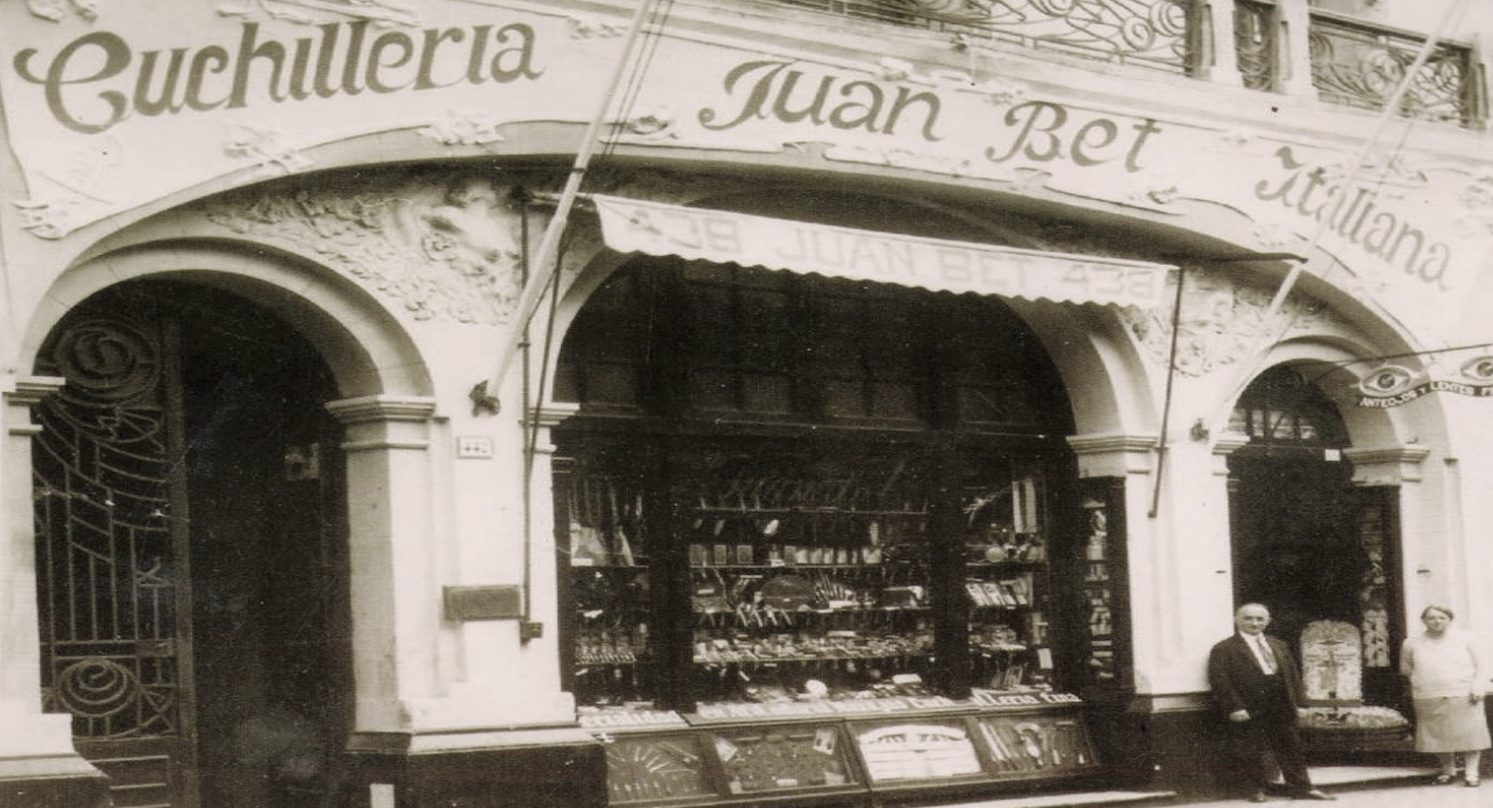
In the late 19th century, Giovanni Bet emigrated to South America and founded the Cuchilleria Italiana Juan Bet in Lima. An advanced business dedicated to knives, steel blades, precision razors and professional sharpening services, including surgical sharpening. In an international and highly technical environment, the knowledge of the Bet family is being strengthened and structured. You don’t export tradition: you build expertise.
1932
Structured growth
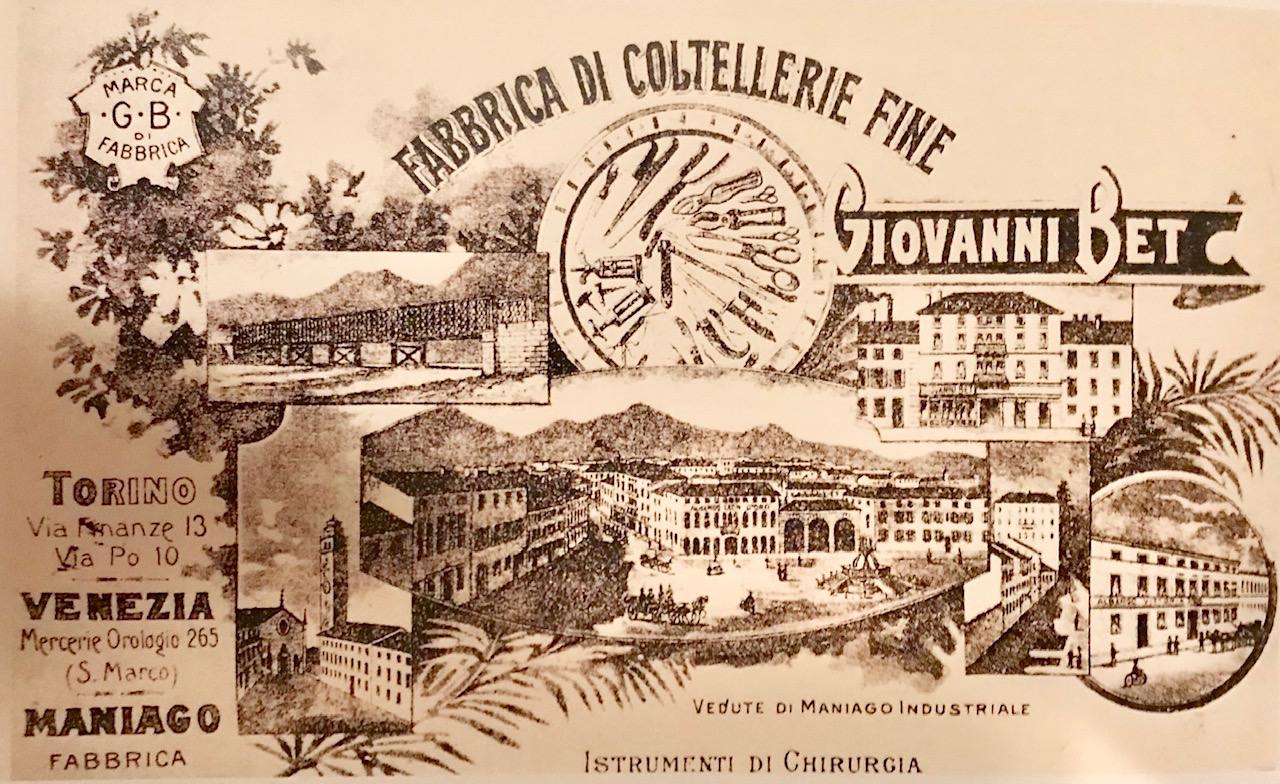
Enrico Bet, Giovanni’s son, marks a new phase for the company with his return to Italy . Maniago is the starting point and technical center. This is followed by Venice and Turin. During the twentieth century Bet Cutlery evolved by combining craftsmanship, design and industrial logic. Historical records tell of a broad and consistent production: kitchen tools, professional utensils, surgical applications. Not isolated specialisms, but a solid production system.
1967
Knowledge of steel
From generation to generation, the company broadens its scope: specialized sharpening, stainless machining, solutions for the horeca sector. In the 1950s, Press Inox, a division dedicated to stainless steel production, was established with John Bet Jr. Here steel is not narrative matter, but the object of study and control. Process, treatment, function. It is this cross-cutting competence that defines Bet’s technical identity.
Values
Method
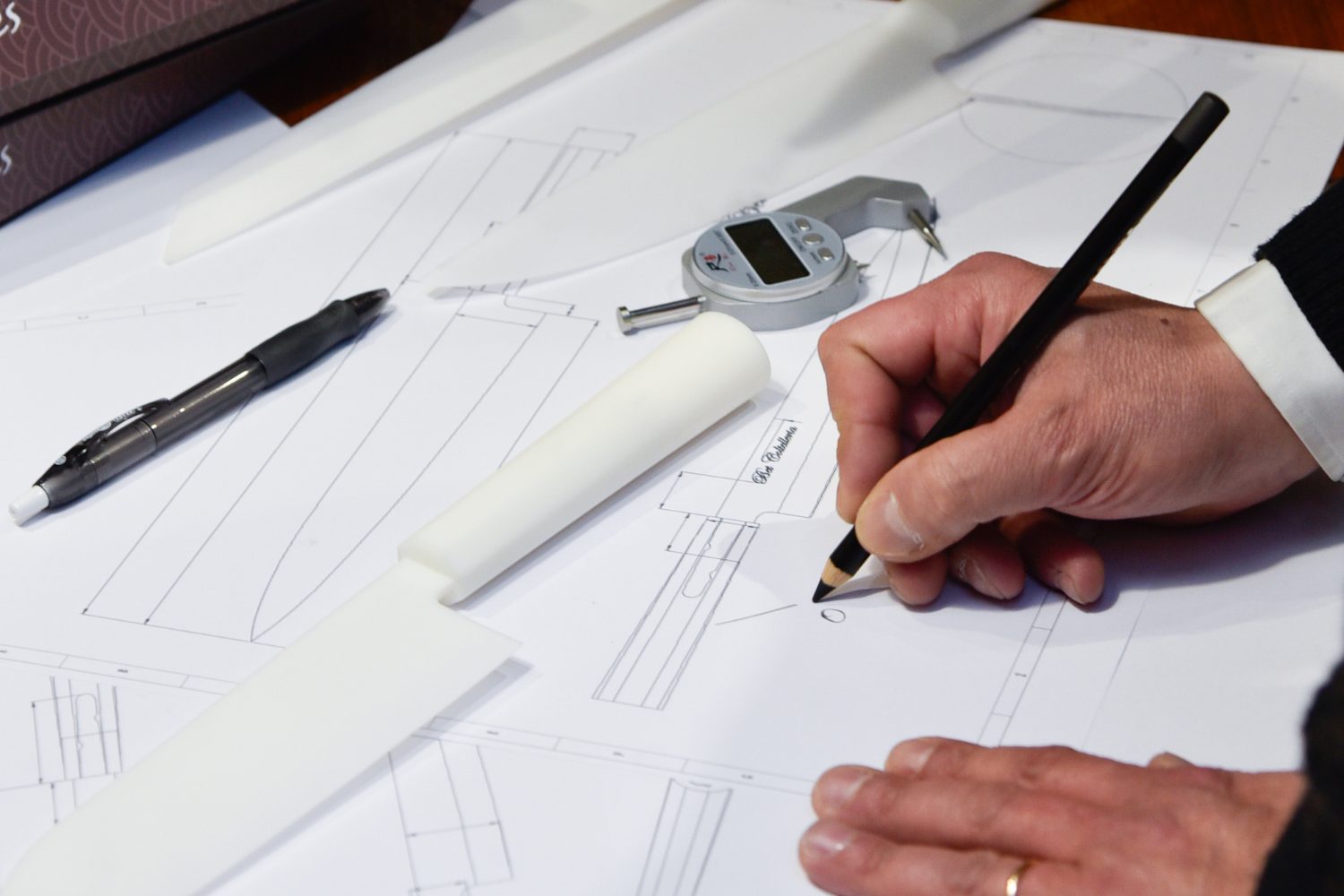
Each blade is born from technical expertise, process control, and real knowledge of the end use.
Essentiality
Few models, no redundancy. Only what is really needed, designed to last.
Continuity
We do not replicate the past. We adapt it to the present with measured and conscious choices.


 Classic Knives
 Japanese Knives